⚡ Rev Up Your Performance The Ultimate Guide to Motor Efficiency Testing 🛠️🌍
In hysteresis brake where energy conservation and operational excellence dominate industrial conversations, motor efficiency testing isn’t just a technical checkbox—it’s the backbone of sustainable progress. Whether you’re managing a manufacturing plant, optimizing HVAC systems, or engineering cutting-edge electric vehicles, understanding how to measure and improve motor efficiency could mean the difference between soaring profits and costly energy drains. Let’s dive into why this unsung hero of engineering deserves your attention—and how to master it. WHY MOTOR EFFICIENCY TESTING MATTERS (AND WHY YOU CAN’T AFFORD TO IGNORE IT) Imagine a world where every motor in your facility hums at peak performance, slashing energy bills while reducing your carbon footprint. That’s the power of precision testing. Motors account for over 40% of global electricity consumption, according to the International Energy Agency. Yet, inefficiencies—often invisible without proper testing—waste energy, inflate costs, and accelerate wear and tear. 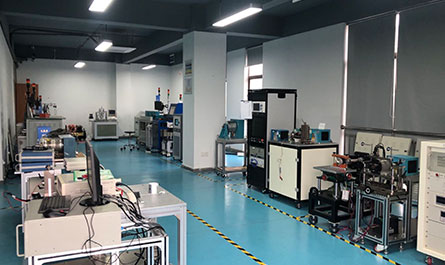 CASE IN POINT: A mid-sized automotive supplier reduced energy costs by 18% annually after identifying underperforming motors in their assembly line through rigorous efficiency audits. The ROI? Achieved in under 8 months. THE SCIENCE BEHIND THE SPARK: HOW EFFICIENCY TESTING WORKS Motor efficiency testing isn’t just about plugging in a device and reading numbers. It’s a symphony of precision measurements, environmental variables, and data analytics. Here’s a breakdown of the critical steps: 1. BASELINE ASSESSMENT Before optimization comes measurement. Technicians use advanced tools like dynamometers, power analyzers, and thermal imaging cameras to evaluate a motor’s current performance under load. Key metrics include input power, output power, torque, and heat dissipation. 2. LOSS ANALYSIS Not all energy loss is created equal. Testing identifies where energy “leaks” occur: – Core losses (hysteresis and eddy currents) – Stator and rotor copper losses – Friction and windage losses – Stray load losses 3. ENVIRONMENTAL STRESS TESTING Motors don’t operate in lab conditions. Simulating real-world stressors—temperature fluctuations, voltage instability, humidity—reveals hidden inefficiencies. 4. DATA-DRIVEN OPTIMIZATION Modern software converts raw data into actionable insights. Machine learning algorithms can predict maintenance needs, recommend design tweaks, or even flag counterfeit components. 🛠️ PRO TIP: Always test motors at multiple load points (25%, 50%, 75%, 100%). Efficiency curves often peak at partial loads—a goldmine for industries with variable operational demands. INDUSTRY SPOTLIGHT: WHERE TESTING MAKES OR BREAKS SUCCESS – ELECTRIC VEHICLES 🚗🔋 A 1% efficiency gain in an EV motor extends range by miles. Tesla’s relentless testing protocols, including 24/7 dyno runs and AI-driven anomaly detection, set industry benchmarks. – RENEWABLE ENERGY 🌞⚙️ Wind turbine generators lose efficiency due to bearing wear and magnetic degradation. Semi-annual testing prevents catastrophic failures in offshore installations. – SMART MANUFACTURING 🤖🏭 Industry 4.0 integrates motor efficiency data with IoT platforms. Siemens’ digital twins simulate years of operation in hours, predicting optimal maintenance windows. THE COST OF COMPLACENCY: REAL-WORLD RISKS A food processing plant learned this the hard way. Undetected phase imbalance in a 100-hp motor caused gradual efficiency drops, leading to: – $23,000 in wasted energy annually – Unplanned downtime during peak season – Premature failure requiring $18,000 replacement Post-testing corrections? A $2,500 capacitor bank and rewinding restored performance to 95% of original specs. FUTURE TRENDS: WHERE MOTOR TESTING IS HEADED 1. AI-POWERED PREDICTIVE ANALYTICS Google’s DeepMind recently demonstrated AI that predicts motor failures 48 hours in advance with 92% accuracy by analyzing vibration patterns. 2. PORTABLE TESTING KITS Handheld devices like Fluke’s Motor Analyzer now offer lab-grade precision onsite, cutting downtime from days to hours. 3. REGULATORY CRACKDOWN The EU’s Ecodesign Directive (EU 2019/1781) mandates minimum efficiency levels for motors up to 1,000V. Non-compliance risks fines and market exclusion. 4. BLOCKCHAIN FOR COMPLIANCE Startups are embedding IoT data into blockchain ledgers, creating tamper-proof efficiency certificates for supply chains. YOUR ROADMAP TO IMPLEMENTATION Ready to harness these insights? Follow this action plan: STEP 1: AUDIT YOUR FLEET Prioritize motors that: – Operate over 2,000 hours annually – Are over 5 years old – Show symptoms (overheating, vibration, noise) STEP 2: CHOOSE YOUR TESTING PARTNER WISELY Look for: – ISO/IEC 17025 accreditation – Experience with your motor type (e.g., induction vs. BLDC) – Data security protocols STEP 3: ANALYZE AND ACT Compare results against IEEE 112-B or IEC 60034-2-1 standards. Consider: – Repair vs. replace decisions – Retrofitting variable frequency drives – Staff training programs STEP 4: MONITOR AND ITERATE Implement continuous monitoring systems. Set KPIs like: – Energy cost per unit output – Mean time between failures – Carbon emissions per production cycle THE BOTTOM LINE In the race toward net-zero emissions and operational excellence, motor efficiency testing isn’t an expense—it’s an investment with compounding returns. From boosting your ESG credentials to future-proofing against regulatory shifts, the benefits cascade across your organization. As legendary engineer Nikola Tesla once said, “The present is theirs; the future, for which I really worked, is mine.” By mastering motor efficiency today, you’re not just cutting costs—you’re seizing control of tomorrow’s industrial landscape. Ready to shift gears? The road to peak performance starts with a single test. 🚀🔧